
Off Grid vs Hybrid Solar in Gauteng
The choice that roughly doubles the battery and the array
Choosing a solar system for a Gauteng property with a working connection
Off grid sounds like the better system. For almost every Gauteng home, it is the wrong one.
The words push you in one direction. Hybrid sounds like a compromise; off grid sounds like independence. Ask which one people want and most say off grid. Ask what they actually need the system to do, and almost nobody describes off grid.
The difference is not really the equipment. It is what the system has to be sized against — and that one decision roughly doubles the bank and the array for the same house.
A hybrid is sized for a normal week. When a run of cloudy days empties the battery, the grid quietly covers the gap and the system carries on.
An off-grid system has no gap to cover. It has to be sized for the worst week of the year — mid-winter, overcast, every load that could run at once — because there is nothing behind it. You pay for that worst week every day of the other fifty-one.
Off grid vs hybrid solar in Gauteng: the short answer
If you have a municipal connection that mostly works, you want a hybrid. It cuts the bill, it carries you through load shedding, and it does not make you pay for a winter week that comes once a year.
If you have no connection — a smallholding, a farm, a site where the quote to bring power in is worse than the system — off grid is the right answer, and the extra cost is not extra at all. It is the cost of having power.
What off grid is not is an upgrade. Cutting a working connection to prove a point buys you a larger bill and a system with nothing to fall back on.
Hybrid
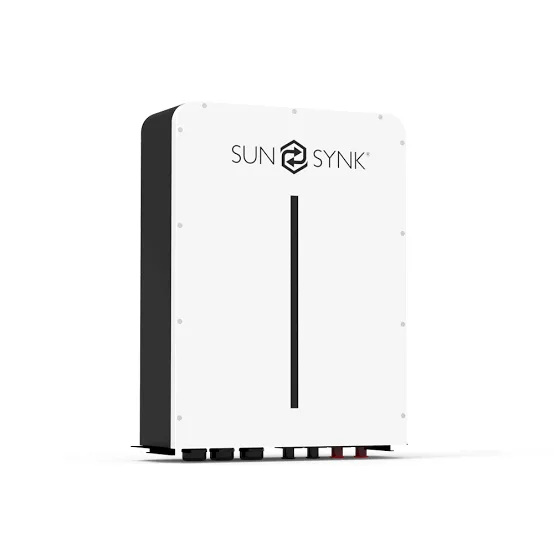
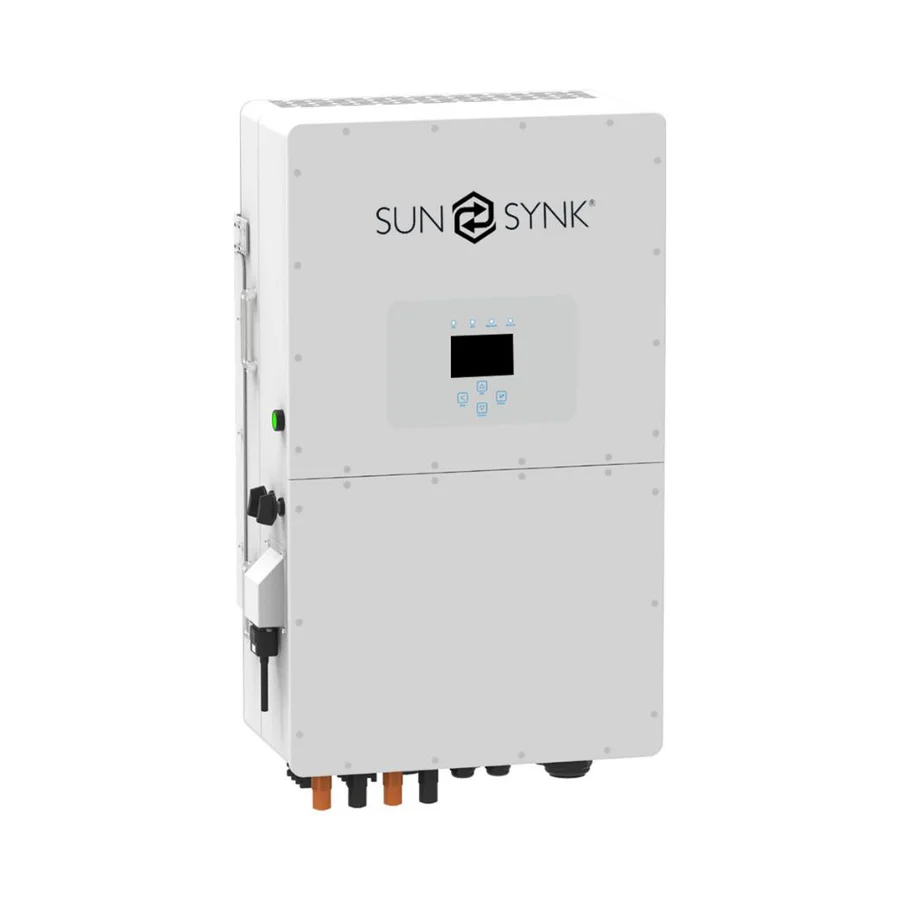
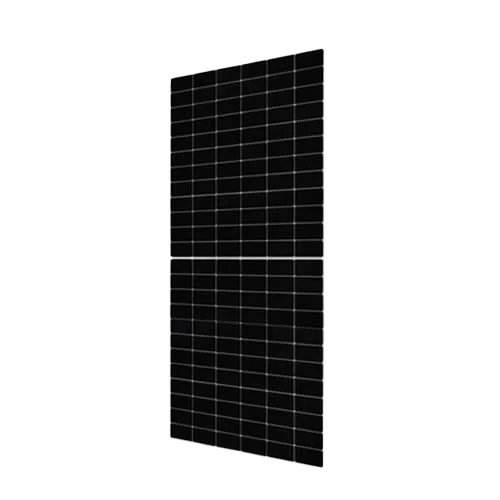
Panels, inverter, battery — grid still connected
Solar runs the house through the day and charges the bank. The battery carries the backed-up circuits through load shedding and into the evening. The grid sits behind it all, doing less and less.
- Sized for a normal week, not the worst one
- The grid covers a bad run of weather, so the bank does not have to
- You choose what gets backed up — the heavy loads can stay on the municipal side
- Can grow later: add battery modules as the budget allows
- Still a municipal account, smaller than it was
Off grid
Panels, inverter, a large bank — no grid at all
Everything the property uses has to come from the system, every day of the year. That changes the sizing question from "what do you normally use" to "what is the worst this could be".
- No municipal account at all
- Works where there is genuinely no connection to be had
- Bank and array roughly double for the same house
- A bad winter week means a generator, or going without
- Adding a load later can mean resizing the whole system
Why the bank doubles
The arithmetic behind the difference
This is the part that decides the price, and it is worth seeing rather than being told. Take a house using 30 units a day, with the geyser and pool pump moved into daylight so roughly 45% of that load runs while the sun is up.
-
Hybrid: cover the night
Only the after-dark share has to come out of the battery — about 16.5 kWh. Size the bank so that is not the last drop and you are near 21 kWh usable.
If the weather ruins a day, the grid covers it. The bank never has to be bigger than a normal night.
-
Off grid: cover the night and the bad day
Nothing sits behind it, so the bank carries a share of the whole day as well as the night. Our rule is 75% of the daily load held in usable capacity — about 22.5 kWh usable — and never letting a normal night take the bank below its reserve.
Usable, not nominal. A bank quoted at 30 kWh that gives back 24 has not met a 22.5 kWh target.
-
And the array has to refill it
A bigger bank is useless if the roof cannot fill it by sunset. A hybrid array is sized at about 120% of the daily load; off grid we go to 140%, so it still recovers on a poor day.
That is the second half of the cost, and the half people forget when they compare two quotes on battery size alone.
When an off grid solar system genuinely is the answer
We build these, and for the right property they are the only sensible option. The test is not how much you dislike your municipality — it is whether a connection exists and works.
- There is no connection. A new smallholding, a plot outside the reticulated area, a site where the quote to bring a line in runs to six figures. Here off grid is not the expensive option; it is the cheap one.
- The connection is nominal. A supply so weak or so unreliable that you cannot plan around it. Worth measuring before deciding — we can log it for a week and find out whether it is as bad as it feels.
- The property is seasonal or remote. A lodge, a workshop, a pump station where a line and a meter are more trouble than a system.
What we will not do is talk someone with a working Eskom or City Power connection into cutting it. Keeping it costs a fixed charge and buys you a system half the size that never leaves you in the dark.
Not sure which one your property needs?
Send the units off your last statement. The sizer works out both — what a hybrid would take and what off grid would take — so you can see the difference in kWh and in rands rather than in adjectives.
Areas we cover for off grid vs hybrid solar in gauteng
We are based in Alberton and travel across the areas below. If your town is not listed, ask us anyway - we often go further for larger projects.
Coverage
- Alberton
- Alexandra
- Atteridgeville
- Bedfordview
- Benoni
- Boksburg
- Braamfontein
- Brakpan
- Bronkhorstspruit
- Centurion
- Cullinan
- Daveyton
- Diepsloot
- Duduza
- Edenvale
- Erasmuskloof
- Etwatwa
- Fourways
- Garsfontein
- Germiston
- Hammanskraal
- Inner City
- Irene
- Katlehong
- Kempton Park
- KwaThema
- Lynnwood
- Mamelodi
- Menlyn
- Midrand
- Modderfontein
- Mooikloof
- Nigel
- Orange Farm
- Pretoria Central
- Pretoria North
- Pretoria West
- Randburg
- Rayton
- Roodepoort
- Rosebank
- Sandton
- Soshanguve
- Soweto
- Springs
- Sunnyside
- Tembisa
- Thokoza
- Vosloorus
- Waterkloof
Mpumalanga
- Balfour
Gauteng
- Johannesburg The richest city in Africa by GDP and private wealth, Johannesburg functions as the economic capital of South Africa and is home to the continent's largest stock exchange, the Johannesburg Stock Exchange.
Questions we get asked
General
A PV solar system, also known as a photovoltaic system, converts sunlight into electricity using solar panels made of semiconductor materials.
Our services
We offer backup battery kits, off-grid solar kits, grid-tied solar kits and hybrid solar kits.
It depends on what you need: to be independent of the utility grid, to save money by reducing what you draw from it, or the best of both worlds. Grid-tied systems that feed electricity back into the grid are not available in every region of South Africa.
If you are not sure, use our system designer and it will size one from your bill.
Not the question you had? Ask us directly or phone 0110836450 — we would rather answer it than have you guess.
